A simple trading plan checklist.
A trading plan is a written set of rules for what you’re looking for, when you’ll sit out and how you’ll review what you did. Start with three questions you can answer before and after a paper-trading session.
What should I write down?
What am I waiting for?
Name the market and the setup you’re practising. Write the specific condition you need to see and what would make you skip it. If your paper plan includes an entry, write down where the idea would be invalidated and how you’ll record the simulated risk.
Did my conditions show up?
Record what you actually saw and did. Save a chart screenshot if it helps. If your conditions never appeared, write down why you sat out. That’s a useful journal entry on its own.
Did I follow my plan?
Compare your actions with your original rules. Record the outcome separately. Pick one decision to repeat or one rule to make clearer for the next practice session.
What waiting looked like on MYM.
I marked up a Micro E-mini Dow futures (MYM) setup on October 26, 2026, and took the trade on October 29 in a prop evaluation account. My notes linked a five-minute demand zone to a broader area I was watching. I planned my entry and risk in advance.
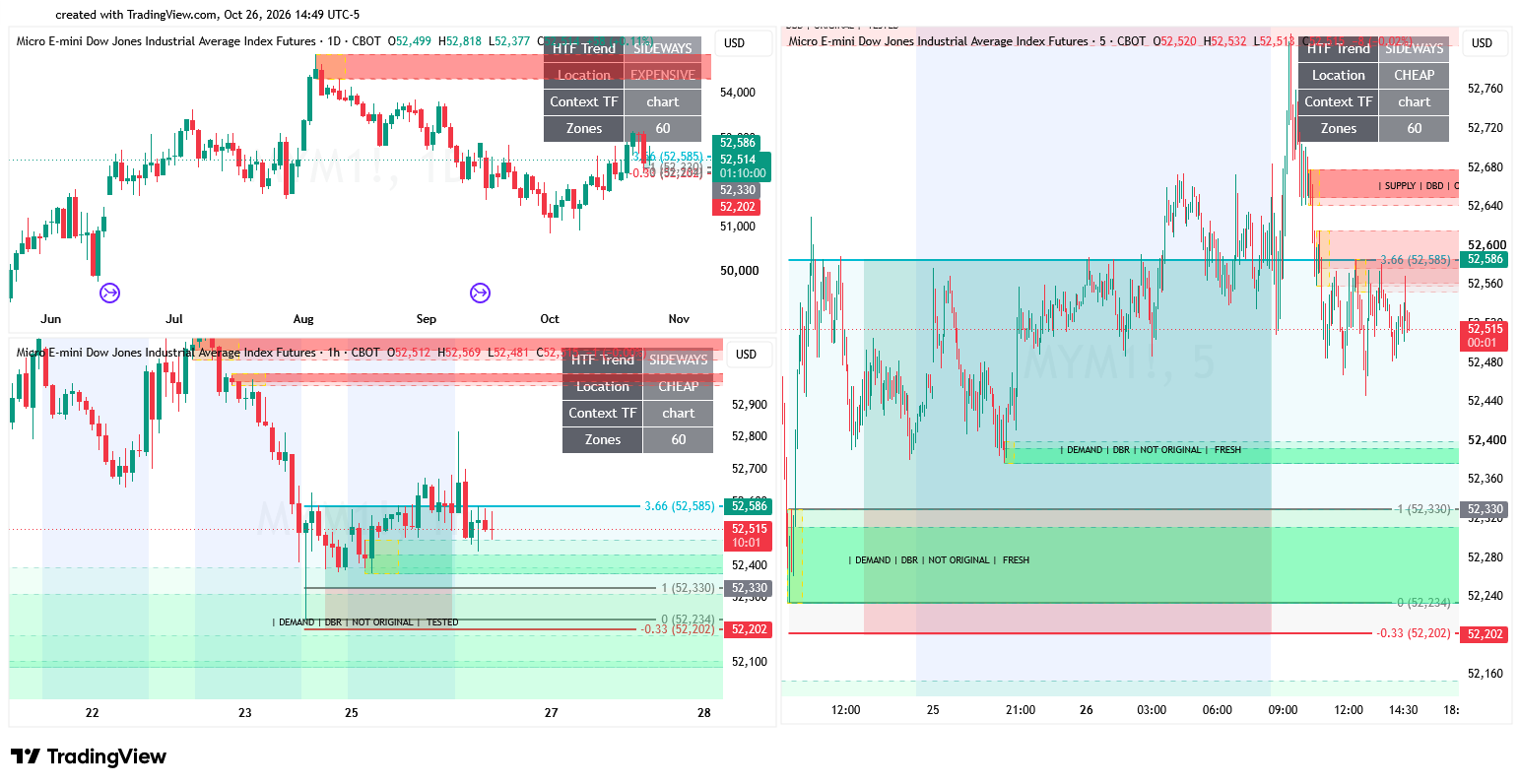
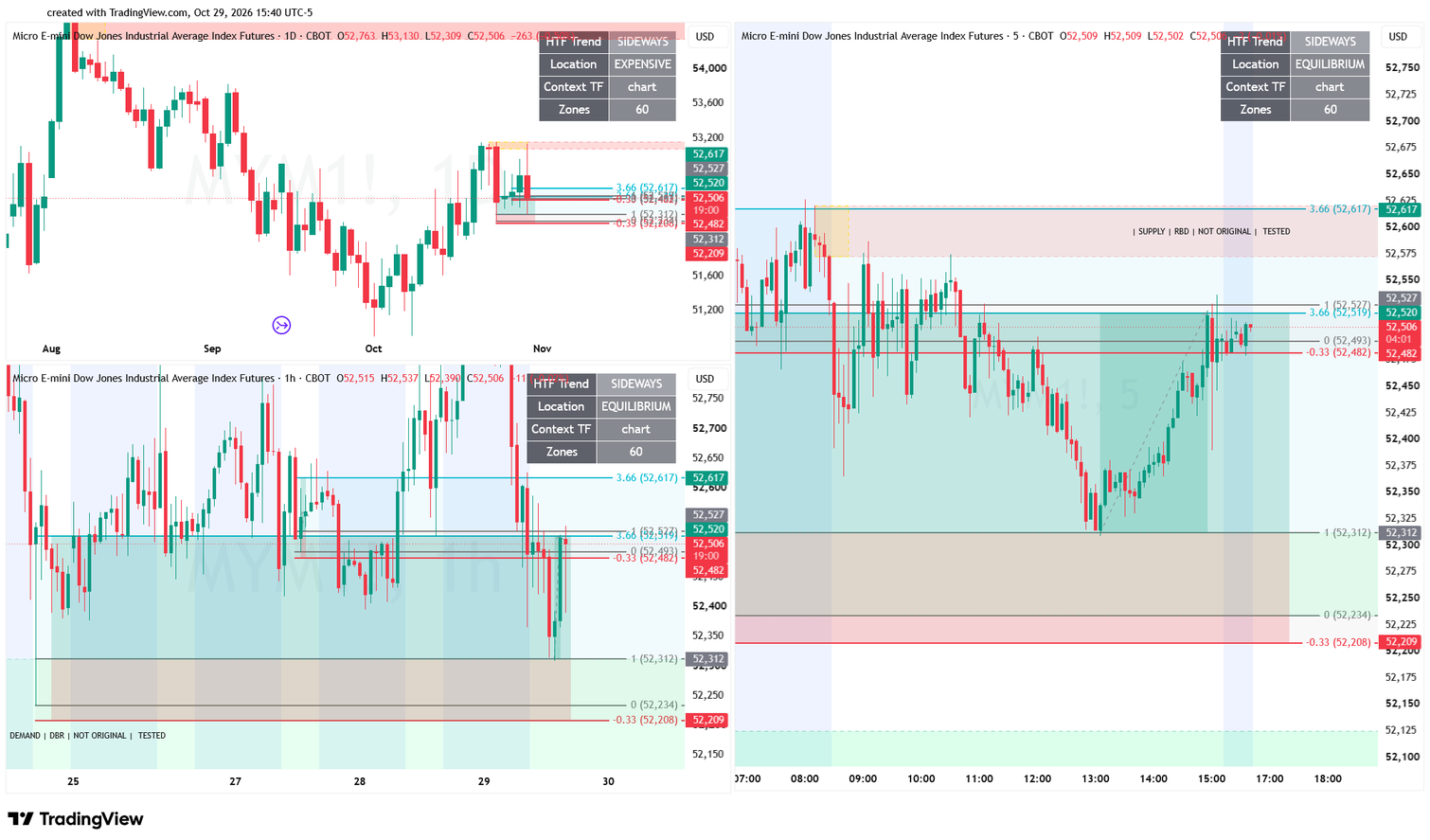
Try this with a setup you’re practising. Before the session, write down what you can see and what you’re waiting for. Afterwards, compare what happened with those original notes. Ask whether you followed your plan using the information you had at the time.
Give yourself a small place to start.
Pick one setup and write down what you’ll wait for. After the session, note what you did and whether it matched the plan. Bring one question or reflection to the free Piepz on the Charts Discord if you’d like to discuss it.
Join the free community →Educational trade review and practice prompts. Trading involves risk. A single example does not establish how a setup will perform.